It’s 2012, Time to Talk Resolutions?

Another year gone and it’s time to take stock of things done and make some plans for the new year. Do you want me list off a lot of goals and resolutions for 2012? I didn’t think so – too boring. How about if pull out my list of goals for 2011 and tell you some of the stuff I actually did. Things really done are always more interesting to read about.

After devoting a huge amount of 2010 to getting Dallas Makerspace off the ground, I took most of 2011 off from hackerspace managing. I attended meetings and helped out now and then but most of my time and interest went elsewhere.

In late January 2011, I joined a team of Camerpedia editors in saving the website from being assimilated by Wikia. We relaunched it under the new name Camera-Wiki.org. I developed quite an interest in Vivitar history and have been collecting many of the oldest Vivitar lenses; not just to document on Camera-Wiki but also to shoot with. Camera-wiki.org has been a huge success and has attracted lots of new editors. It’s growing at a faster rate than it ever did in it’s previous incarnation and we’re working hard to improve the quality as well as the quantity of the content. Hosting is paid for entirely through donation, so if you appreciate old cameras and lenses, why not help us out by donating a few dollars to our hosting fund!

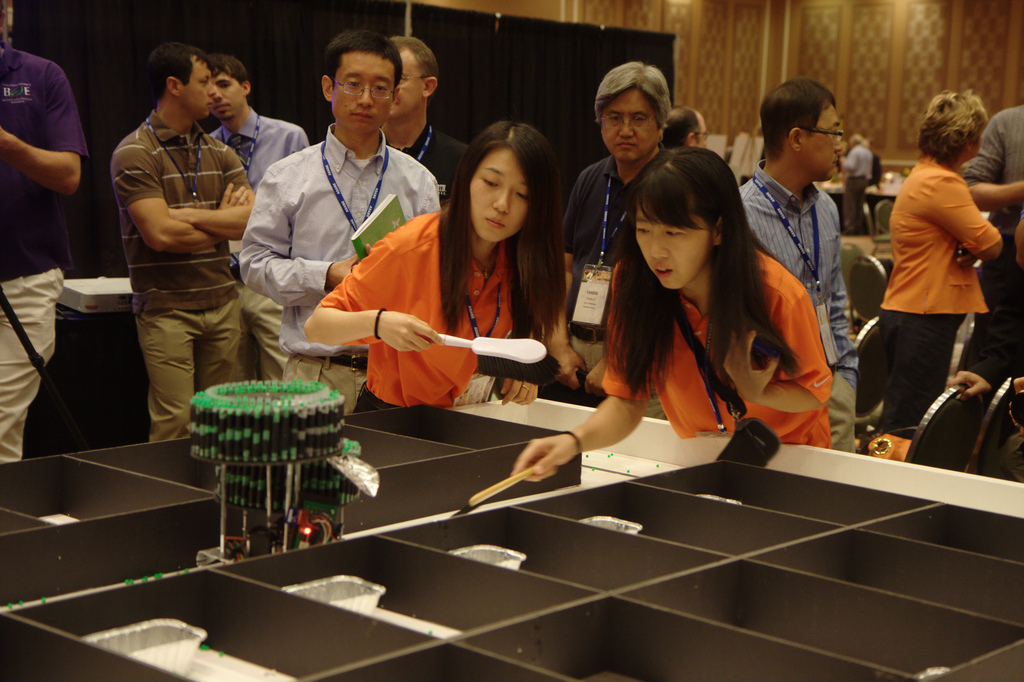
I’ve continued to pursue photography in other ways. I did several more shoots with models in 2011. I did several paid shoots including a gig as the official photographer for the 2011 Vex World Championships. My photo essays continue to be published in Robot Magazine and Servo Magazine. One of my photographs was displayed in a local art exhibit, meeting another of my goals for the 2011. I hope to be in more exhibits during 2012.

Susan and I attended lots of art exhibits, music performances, and a few lectures. I managed to get to several Pecha Kucha and Spark Club events. Much more of the same for the 2012 I hope!

If you’re not an Advogato or robots.net user, you won’t really care but I finally managed to get the long-awaited libxml2 parser into the mod_virgule code base. It’s still a bit buggy but no more so than the old parser and it provides a good path forward for consolidating and simplifying the code. Whether mod_virgule can remain relevant in the world of Facebook and Google+ is another question. Perhaps 2012 will provide the answer to that one.

2011 was the year I finally created some ornaments for the annual Blue Yule charity auction at the MAC. I also volunteered at the 2011 Art Conspiracy Auction. That took care of two more 2011 goals. I hope to find a few more outlets for my artistic and creative sides in 2012.

As usual, there were goals I didn’t meet in 2011. I didn’t finish the project of scanning all my family photos. This has turned out to be much more material than I’d anticipated. I’ve scanned thousands of old photographs and negatives so far. Hopefully 2012 will see the scanning portion of the project completed.

2012 is an election year but with Obama running for his second term that means there is only going to be a Republican primary this year. I consider myself an independent but still feel compelled to vote in the primaries, which means this year I’ll be voting in the Republican primary regardless of how I vote in the final election.

At present I’m leaning toward Ron Paul for the primary vote. I don’t really like any of the choices but Ron Paul seems the least insane of the bunch and I think may be the only one of them who holds any positions at all that I actually agree with.

So for the next four years, the State of Texas will consider me a Republican despite my claim to be an independent. I’m pondering whether I should start going to my local Republican group meetings and see if I can do anything to reform them or shift them a bit toward the center or at least slow their movement toward the right-wing fringes. Unfortunately, I don’t think reason mixes well with the far right (or the far left for that matter). I’ll report on my experiences if anything interesting happens.

Help Preserve Vivitar History!

Want to help preserve the history of an American camera and lens company? Let me tell you a story…

I’ve been using some of my spare time in the last few years playing with vintage cameras and lenses. I search for interesting vintage items at estate sales and online. I recently came across a very unusual lens, the Vivitar Professional 180mm f/2.8. It’s large, heavy, very good quality, and completely unknown. It was attached to a Pentax Spotmatic camera that I picked up for a few dollars and no particular significance was placed on the lens (it’s just an old Vivitar, right?) There was no trace of this 180mm lens to be found online until I started posting queries and information about it. No printed Vivitar price list or lens resale list that I’ve consulted had any record of it.

I took my mysterious Vivitar lens to Don’s Photo Equipment to see what they thought. Their conclusion was that I had either a one-of-kind prototype or a custom-made lens. The serial number suggests I have copy #2, so it’s highly likely that at least one other copy existed at one time. The lens is badged “Vivitar Professional” which is itself a rare thing. Only one other lens is known to have been made with that badge, the Vivitar Professional 135mm f/1.5, a lens designed and built for NASA in the 1960s, a small quantity were also made for sale to the public (some say as few as 30 were made). A little online research has turned up at least 3 existing copies of the Vivitar Professional 135mm f/1.5 that occasionally sell on eBay when one owner gets tired of it and passes it on to a new owner. It appears the 180mm may be even less common.

I hope to find time to shoot a series of test images with the lens soon. For now, I do have photos of the lens itself as well as one sample image I shot with it during a recent model shoot on the Texas-Pacific Railroad Bridge south of downtown Dallas (check out the rest of the photos from that shoot too!)

As I seached for info on my Vivitar Professional 180mm I realized just how little is known about Vivitar. German lens companies like Carl Zeiss or Japanese lens companies often have huge websites devoted to them and numerous books written about them. But there is almost no historical research to be found on Vivitar. I’m trying to remedy that by putting some work into the Vivitar pages on Camera-wik.org. I’ve been slowly piecing together Vivitar’s corporate history from old newspaper archives and scraps of info gathered from patents and other government filings. I’m also compiling a comprehensive list of lenses and other products they marketed. They sold a large number lenses designed and manufactured by a dozen different companies. Trying to piece together the lens families and an accurate lineage of each lens is proving to be quite a challenge.

And this is where you can help out in preserving this piece of America’s photographic history! I need two things: 1) Vintage photography magazines from 1938-1978 with lens reviews and Vivitar advertisements (e.g. Camera 35, Modern Photography, Popular Photography; Vivitar also advertised extensively in Playboy and Popular Science in the latter part of the time period). If you’re reading this and have any old camera magazines with Vivitar info from that time you’d like to get rid of, let me know. I’ll put them to good use, including scanning any public domain advertising and making it available to vintage camera researchers on Camera-wiki.org. 2) If you have any old Vivitar lenses of any kind that you were thinking of dropping off at Goodwill or the Salvation Army, send them my way instead. I’ll photograph them, review them, and add the data to Camera-wiki.org. And afterwards, I’ll give them to the photography group at Dallas Makerspace where they’ll be used as loaners for local photographers.

Goodbye Camerapedia. Hello Camera-Wiki.org

When I became interested in vintage cameras, I discovered an invaluable website called Camerapedia. It was a huge wiki created by vintage camera geeks from around the world with photos and specs for thousands of cameras. I started contributing in a minor way with what little I could; a new Argus C page here or a new link for the Bilora Bella page there.

In January, I visited Camerapedia to look up some information on a new Kodak Retina IIa. What I found instead was a disturbing discussion about Camerapedia itself. One of Camerapedia’s most prolific contributors had revealed some inside information about a brewing take-over of the site. The website’s original founder and, unfortunately, sole owner of the Camerapedia domain name had entered into some sort of secret negotiations with an unnamed company to sell the domain.

There was a lot of concern about the refusal of the parties involved to offer any explanation or even name the company. It turned out they may have been justified as the company was Wikia, not exactly a well-liked name in the Wiki community. For those not in the know, Wikia operates something like the Borg from Star Trek. They move from one free community wiki to another, assimilating them through unfriendly, if not unethical, means. The content from each wiki is moved to Wikia’s ad farm, the old domain name redirected, and Wikia takes control of the administration of the Wiki, leaving the community as little more than unpaid workers supporting Wikia ad profits.

Obviously no wiki wants this, so how does Wikia get away with it? One of Wikia’s tricks is to target a wiki in which a single person controls the domain name. They offer a tempting sum of money to this one person to sell Wikia the domain name. Wikia then announces to the community that they’re going to “help” the community by providing them free hosting. This is the part where a Borg representative shows up on the main viewscreen of the Enterprise and says, “You will be assimilated, resistance is futile. Your technology will be adapted to service the Borg.

By the time the Camerpedia community realized what was happening, the domain name had already been lost and only days remained before the domain became nothing but a redirect to Wikia’s servers. Fortunately, things didn’t go as smoothly as Wikia had hoped. A rebel force quickly formed among Camerpedia’s admins and contributors. Even though I’d been only a minor contributor, I had the privilege of becoming technical lead for the “rebel alliance”.

It was January 25 and time was critical. Wikia put the Camerpedia site into read-only mode that day, which meant they’d started the assimilation process and we now had only hours left. During the day I began receiving page lists and other information from inside sympathizers. Luck would have it that this was a Tuesday, so I skipped my usual DPRG Robot Builders Night Out meeting and stayed late at the office coding.

I set up a database and installed MediaWikia on a local server. Meanwhile, a Perl script was collecting XML exports of pages and edit histories from Camerpedia. By midnight, the export was complete and I started loading the data into my local MediaWiki. For a 10,000 page wiki, this was a time consuming process that continued throughout the night.

Without direct access to Camerapedia’s database, it wasn’t possible to get user account info. None of the sympathetic admins had access to the data either, so the backup plan was to export the public user listing and grab all the user profile pages. However, Wikia finished the assimilation and the old site went dead before that could be completed. I had a partial user listing and was able to get a large number of user profile pages, however. I wrote a quick Perl script that evening to generated random passwords and create an importable CSV file of user data.

Thursday evening, I skipped my usual Dallas Makerspace meeting and spent the time reconstructing the correct MediaWiki configuration to make the site actually work. Camerapedia relied on an assortment of MediaWiki extensions that took some guessing to figure out. I hadn’t thought to save the old version info page and Wikia reconfigured things on their assimilated version of the site.

While I was busy with geeky stuff, Voxphoto and others worked on selecting a new name and other organizational issues. As you may have guessed, the site is now called Camera-Wiki.org. Simple but descriptive; plus it had the advantage of all three major TLDs being available as well twitter and Facebook namespaces.

There were still more minor hurdles over the next weeks as we operated largely in secret. The new website was live on a local development server but before we could launch we had to find inexpensive scalable hosting. The community was already making donations to pay for the hosting. It seemed like a conflict of interest to host this at my facility, so I suggested Dreamhost. I’d had a good experience with Dallas Makerspace’s MediaWiki site hosted there. We opted for two virtual private servers, one running MySQL and one running Apache. Low-end VPS systems are not as fast as physical servers but are easily scalable, allowing us to start out cheap and scale as traffic increased.

Voxphoto started a Camera-Wiki flickr group and we began quietly letting other contributors know what we were up to. Membership in our group grew quickly and thousands of photos began pouring in. As with the original Camerapedia, the new Camera-Wiki.org, doesn’t host photos. We embed flickr photos hosted by the individual contributors. This saves money and bandwidth for us and makes it much easier for people to contribute a photo.

However, the hosting arrangement with flickr presented one difficulty for us. Camerapedia had a policy of accepting non-CC-licensed photos by using a blanket usage license that the user agreed to when submitting a photo to the Camerapedia flickr group. The wording mentioned Camerpedia by name. With a different name, it was no longer clear that we still had permission to use those images. Time to write another script.

This time I wrote a PHP program that used the MediaWiki API to export a list of every flickr image in the wiki. Then it used the flickr API to retrieve the license, user, and group affiliations for each photo. If a photo was CC licensed, we ignored it, if the user was a member of our new group and had already granted permission, we ignored it. What remained was a list of about 1,500 photos with potential copyright issues. This list was moved into a page on the wiki and we crowdsourced the problem to the editors. In most cases we were able to contact the photographers and get permission, in others we were able to replace them with CC images or images from our own group.

Interestingly, Wikia faces a similar problem with their assimilated version of the Camerapedia site. Many of the contributors allowed their photos to be used under a CC license that prohibited commercial use. Wikia is a for-profit company whose business is using those photos to sell ads. So far, they’ve made no effort to remove these photos, despite multiple direct complaints from some of the photographers asking for their removal.

We’re now very close to making an official public launch and things have slowed down enough for me to write this overly verbose blog post. I need to give credit here to all the Camerapedia admins and contributors like Voxphoto, Uwe, Dirk, Hans, HaarFager, Süleymandemir and many others, who did a lot of hard work to make this happen (sorry, I know I’m leaving out a lot of names there!). Voxphoto has been busy working on the new Camera-wiki Blog and keeping our Twitter feed going. He also designed our interim logo (a bit of a joke on the idea of forking a camera site). Vox and the other editors have also done a massive amount of work on the wiki itself, adding new pages and improving old ones.

I should also thank the many MediaWiki developers, experts, and users I sought help from along the way. More than once I was helped by people who identified themselves as “Wikia survivors”, some whose wikis had successfully escaped the takeover as we seem close to doing and others who lost their wiki and eventually gave up and moved on to other interests.

Finally, this is still an ongoing struggle and you can help. Let people know that instead of Camerapedia, they should be using Camera-Wiki.org now. Camerpedia was a well-recognized source of vintage camera information and there are links to it all over the web. Unfortunately, all those links now point to a domain that redirects to Wikia and their ad-encrusted, outdated version of the content. If you see one of those Camerapedia links, take a moment to change it or email the webmaster and let them know to change it – from camperpedia to camera-wiki.org – and maybe before long we can say for sure that the Borg didn’t win this one.
Goals and Resolutions

January is the time of year for setting goals and checking to see how I did on last year’s goals. It’s probably more interesting to hear about things I’ve done or tried and failed to do than to hear about what I plan to do in the future. I’ll stick with the former. We get enough of the latter from our politicians.

I achieved a lot of my minor goals and resolutions last year. I relaunched my blog, made reasonably regular blog posts, and consolidated my online presence under a single name, I got a couple of nice photo essays into Robot magazine, I did two photos shoots with models, got some photos into a museum exhbiit (at their request even!), I repaired and shot usable photos with several vintage cameras, I finally participated in the 24 hour video race!

I also did a few things that weren’t on my ToDo list but were still really cool, like speaking at Pecha Kucha, demonstrating robotic music to an art class in Denton, hearing the Buzzcocks play live, painting highway pillars in Deep Ellum, and meeting lots of cool people.

But the one really big thing from 2010 has to be helping to get a Dallas Hackerspace started. Back in January 2010, Ed and I hatched the plan. Through the first half of the year Ed and I were meeting weekly at Cafe Brazil or where ever we could find free WiFi, planning and organizing, trying keep things rolling. I also got invaluable advice starting out from folks like Sarah Jane Semrad. During the first half of the year, it sometimes felt like Ed and I were pushing a train up a steep hill. I took on way more projects than I could possibly do but somehow managed to get most of them mostly done (thanks to getting lots of help from friends).

Towards the end of 2010, Ed took a job in Pittsburgh but things had gathered so much momentum by then, that instead pushing a train up a hill, at that point it felt like the train had crested the hill and was accelerating down the other side, with me hanging on for dear life. The group gained so many new members that it took on a life of its own. It didn’t quite turn out the way either Ed or I expected but that’s a good thing – it proves the group can survive without me or any one person at this point. I’m looking forward to being just a member of Dallas Makerspace in 2011 and having more free time to devote to other ventures.

There were goals I didn’t meet in 2010. I had set a goal of doing one Noise Boundary performance per month but that fizzled out after April; initially because I was too busy with the hackerspace and later because my partner in noise, Ed, left Dallas. I utterly failed to get the long-awaited libxml2 HTML parser patch into mod_virgule. I did spend time on it and it’s very close with only one annoying bug yet to solve. I also have software patches for Apache and ChucK that didn’t get submitted. Garage renovation plans were thwarted by a series of set backs.

Some of those things will get bumped to my 2011 list along with a lot of new goals and resolutions. Will I get anything done in 2011? Stay tuned to find out. I plan to have fun trying at least.

Photography Update

I’ve been so busy helping to get a Dallas hackerspace started that I’ve neglected my blog again. But I haven’t been too busy to continue my photography experiments. On the vintage camera front, I’ve acquired a few new items including an Ansco 1065 fixed focus 35mm and a nice postwar Argus C3. I’m hoping to get the Argus C3 cleaned up and functional in time for Argus Camera next week. So far it’s looking to be in much better shape than the prewar Argus C3 I found last year.

I’ve also made some progress on my goal of doing more photography of actual humans instead of just still life and landscapes. In June I got to do a photo shoot in Deep Ellum with Ofa Santos, a beautiful Filipino-Chinese model. In July I did a very colorful shoot with Lolly Five, a model from Alabama who was in town for the ScrewAttack Gaming Convention (SGC).

Speaking of SGC, I shot a few SGC event photos. I also shot photos of many amusing protest signs at several of the Westboro Baptist Church counter protests in Dallas and Arlington. And if protest signs aren’t your thing, how about art clocks? I shot a lot of photos at the 2010 Art Conspiracy SEED auction, where clocks designed by local artists were auctioned for charity. The new Dallas Makerspace built one of the clocks and ours drew one of the highest bids of the auction.

Finally, I got several paying photography gigs during June and July. Looking forward to more of those in the coming months. It would be nice to do enough paid photography work to start paying for new camera gear!

Time to get this blog rolling again

2010 got off to a good start, then I was hit by some unexpected family losses followed by some annoying family weirdness. Between that and a larger than usual assortment of extra-curricular activities, my blog got derailed. It’s time to fix that.

For those who haven’t kept up with my twitter feed or photo stream, here’s the short version of what you missed the last few months: 1) The DPRG is working on starting a Dallas Hackerspace. We’ve decided to call it a Makerspace because Dallas people seem to be easily spooked by the word “hacker”. 2) I’m still playing with vintage cameras and have more in the queue to try out. 3) Still playing with my DSLR too. Got some recent photos into an exhibit Germany. My photos of the Traveling Man Sculpture made into the May/June issue of Robot magazine 4) Still working on the Noise Boundary robotic music project. We did a demo for a class at UNT and I got the opportunity to chat with Pay Metheny about the topic 5) DPRG did some major stuff at All-Con this year and also at Tech-Fest and the FIRST LEGO League regional championship. 6) Lots of other fun stuff, events, people, and places. More to come.

June is gone already!?

Yes, June is over already and it feels like I haven’t gotten anything done. Work has been taking up most of my time. Since I last posted I’ve been to A-Kon 2009. I shot few A-Kon cosplay photos plus a few time exposures of the A-Kon Friday night rave. I also shot a few photos at Jerry Chevalier’s 2009 Texas Build Off, a cool event where movie robot replica builders from all over the world gather to show off their robots and, more importantly, share building techniques and help each work on robots.

I’ve never managed to blog much more than a couple of times a month, so if anyone reading this actually cares what I’m up to, you might want to follow me on twitter or check my canonical home page where you can see the relatively frequent photo stream updates from my crappy mobile phone camera. By the way, if you’re looking for other robot builders to follow on twitter, check out Wired’s list of 52 Robot Geeks on Twitter.

Speaking of twitter, I really need to find a good way to get that integrated into mod_virgule. And speaking of mod_virgule, I once again completely failed to find time to work on it. But I’ve exchanged some email with another programmer who might be brave enough to start doing some hacking on the code, so maybe that will get me motivated in July!

May Miscellany

Time for a quick update. May started off with the VEX Robotics World Championship here in Dallas. I was one of the judges evaluating the 270 teams and their robots. I’ll probably write a little more about it in an upcoming issue of Robot Magazine for those who are interested.

I created a robots.net twitter feed and robots.net facebook page for robots.net this month. So far the facebook page is ahead with over 160 fans while the twitter feed only has about 38 followers so far. To be fair the facebook page went online a couple of weeks earlier so we’ll see if it hangs on to the lead over time.

I’m still struggling to find time to devote to mod_virgule but squeezed in a few more hours of C coding on the new HTML parser. It’s now running on a test server with a subset of Advogato’s database. So far, so good. Blog aggregation and parsing seems to be working, as do local blog posting, article posting, and article comments. The magnitude of the changes makes this update a bit of scarier than usual for robots.net and Advogato. If nothing breaks in the next week or so of testing, though, I’ll cross my fingers and make it live.

I continue to drag my Canon 40D around with me everywhere and since my last blog post, I’ve shot photos of the Funky Finds Spring Fling craft show in Ft. Worth, the Aveda Walk for Water event in Dallas, the aforementioned VEX Robotics World Championship, the Cottonwood Arts Festival in Richardson, the 2009 DFW Dragon Boat Festival in Las Colinas, oh, and a few pics of my friends at Vivanti Group in Deep Ellum. In the retro-photo department, I posted some BW 127 photos shot with a Kodak Brownie Reflex Synchro. Yesterday, a package arrived containing that rarest of things, color 127 film, from a small manufacturer in Canada. I’ll probably run a roll through the Bencini Comet S sometime soon.