Art Conspiracy Mounted

Decapitated Robot, my piece for the ArtCon Mounted auction

Decapitated Robot, my piece for the ArtCon Mounted auction


This year’s Art Conspiracy SEED auction is called Mounted and has a faux taxidermy theme. Here’s how ArtCon describes it in their official news release “Conjuring visions animal, vegetable, mineral and digital, Life in Deep Ellum will be transformed from a gallery space into a lodge-like, electronic animalistic mounted dream sequence that only those crazy Art Conspirators can produce.” It’s coming up tonight so check it out if you can. My piece for the auction is called Decapitated Robot and it’s made entirely from found objects. I had to come up with a back story to explain the piece, and it goes something like this:

After a survey team crash landed on an alien planet, their robot turned homicidal due to a cognitive viral infection of unknown origin. The ensuing struggle resulted in many dead crew members and one decapitated robot. The survivors mounted the robot’s head on an airlock access panel and hung it in their camp as a reminder of their lost comrades.

So the idea was to the create something that could plausibly pass for an airlock hatch. In an ideal world, I’d live near an airplane grave yard where I could round up some kind of hatch but I had to make do with more mundane parts. Fortunately, I discovered that pretty much anything can conjure up the right idea if you apply diagonal airlock hazard stripes.

The robot head itself is made entirely from found metal objects from my personal junk stash. The face was once part of an Electrolux vacuum cleaner. Add in a handful of fasteners and adhesives from the local hardware store and you have what will hopefully pass for a severed robot head. If you want to see it in person, come by tonight and check out the auction. All the money goes towards the costs of the big Art Conspiracy charity auction this fall, which will benefit a local charity (this year’s beneficiary will be announced at tonight’s event). There will be lots of crazy art, food trucks, and bands.

It’s Been How Long Since My Last Blog Post?

Time flies when you’re having fun. How about a quick summary of what’s been going on around here in the first half of 2013. I’m spending more time on two aspects of my photography interest: photographing models and Vivitar historical research.

I’ve turned a spare room at the office into a makeshift studio, complete with strobes found on craigslist and a cheesy backdrop hanging system. Believe it or not it all works and I’m learning a lot about lighting. My first shoot in the new studio was with Serena and I’ve since shot with Karla, and Lexy. More to come I’m sure.

My Vivitar research has been productive too. I’ve made contact with a half dozen ex-Vivitar people including John C. Best’s son and a former president of the company. I’ve got a backlog of Vivitar lenses and gear that I’m slowly working my way through. Don’t be surprised if you see me wandering around Deep Ellum photographing random people and things with weird old Vivitar equipment.

I finally made the jump to a modern smartphone this year, trading my ancient Samsung flip-phone for a Google LG Nexus 4. That shouldn’t come as a surprise. There are only a handful of choices when it comes to smartphones: the Apple iPhone or one of the hundreds of phones running Android, a phone OS based on the Linux kernel. (ok, technically, there’s also Windows phone out there that has a tiny fraction of market share but seriously, who’s going to buy a phone that runs Windows?!) Anyone who knows me, knows I’m unlikely to buy anything made by Apple if I can avoid it. Apple has made an art of taking away people’s basic software freedoms. Android isn’t completely free of course, there are varying amounts of proprietary software depending on which phone you get. I chose the Google LG Nexus because it’s the least encumbered, with a high percentage of free software, no phone company mandated bloatware, and it’s unlocked, so I can switch providers any time I want.

I got a Nexus 4 for Susan as well and she loves it. She almost never used her old flip-phone because the interface was so non-intuitive. With Android she’s now regularly calling, texting, taking photos, reading the news, even playing Angry Birds.

Dallas Makerspace is still growing like crazy and just expanded to around 6,400 square feet. I’m really only an occasional visitor at this point, having cut back my DMS and DPRG time to a minimum to make room for all the other stuff I’m doing these days. I’ve joined the Irving Art Association and will hopefully be joining the Dallas Camera Club in the near future as well.

Susan and I are trying to get out hear interesting speakers as much as possible too. We went to Joel Hodgson’s talk at the Texas Theater in January, Art Spiegelman at the DMA in February, Andrei Codrescu at the Kessler Theater in March, and just a few days ago Pecha Kucha Vol 12 at Lakewood Theater.

I’ve got a backlog of books to review too. Maybe I’ll post one of those soon if I find time.

Anathem

Anathem


Susan and I are both fans of Neal Stephenson and his books are favorites when it comes to reading aloud. We read Cryptonomicon and the entire Baroque Cycle (Quicksilver, The Confusion, The System of the World) aloud. Nearly everything Stephenson writes has the quality of being so intensely interesting that you feel compelled to keep reading. When reading one of his books to myself, I usually want to read the entire book at one siting, staying up all night in the process. That’s one of the reasons we now read them aloud, it forces us to stop because my voice usually gives out after a few chapters. And the result is that we can enjoy the book over a several weeks, with lots of interim discussion and speculation about where we think the story is going.

One of the things that make Stephenson books so fascinating is that he combines interests in a wide range of topics from history to philosophy to the latest trends in technology. Anathem is no exception and is perhaps his best book to date. The book originated in sketches made by Stephenson when collaborators on the Millennium Clock project were trying to imagine what a clock designed to last 10,000 years would look like. Stephenson thought about the sketches a few years later and they became the basis for the clock and Concent scheme described in Anathem.

The story takes place on an Earth-like planet where society is organized a bit differently than our own. Scientists and philosophers live apart from the rest of society in closed convents called Concents. The separation is due to the alleged troubles that such people caused in the distant past by constantly introducing dangerous ideas and technologies to the “saecular” world. Technology, the physical manifestation of science and philosophy, is forbidden within the Concents. The fraas and suurs within the Concent can contemplate their ideas and think all they want but they are not allowed to build or use any technology more advanced than woodworking or stone masonry. As part of this grand experiment of dividing the thinkers from the rest of society, Concents are further subdivided into a series of concentric walls. Each successive inner circle stays closed to the outside world for a longer amount of time. Fraas and suurs from one circle may choose to move further inward over time. At the outermost level, the Concent opens its doors to the saecular world once every year. The next level opens once ever 10 years, the next every 100, and the last every 1,000. These openings of the Concent to the saecular world are called Aperts. Fraas and suurs in the innermost circle may have lived their entire life in the Concent. In the saecular world outside, cities come and go, governments change, entire civilizations rise and fall. Within the wall of the Concent, life continues on unchanged except for constant learning.

The story opens in the Concent of Saunt Edhar as the young Fraa Erasmas, known as Razz to his friends, is preparing for his first Apert in a decade. He and his friends are looking forward to seeing how the world has changed in the ten years since they were presented to the Concent as children to be trained in the ways of math and science.

It becomes evident rather quickly that this will be no ordinary Apert. The saecular governments are stirred up about some incredible event, so strange and dangerous that they may have to put aside the rules separating those who live within the Concent and draw upon their vast, theoretical knowledge to save the world from destruction.

Erasmus and friends are launched upon an unexpected journey into the saecular world and must shoulder responsibilities and face threats beyond any they’ve been prepared to deal with. They are joined by higher level Mathics including a Thousander who has spent so much time in the ethereal world of theoretical physics, it’s unclear whether he’s still entirely human or if he may have learned the secrets of feared and possibly mythical early Mathics known as The Incantors.

Along the way, the story delves into the many worlds interpretation of quantuum mechanics, the metaphysics of Platonism, Penrose tiling, the relationship of religion and science, and many other fascinating and esoteric topics. All this is couched in a story-line of almost constant action that includes martial arts, political intrigue, space combat, and some old fashioned romance.

Describing much more of the plot would likely give away something you’d enjoy discovering for yourself. Unlike some Stephenson books, like those of the Baroque Cycle where things slow down from time to time and Stephenson spends half a chapter describing the skyline of historic England, Anathem kicks into high gear in chapter one and never lets up. It’s action, crazy ideas, romance, surprises, and humor all the way through. To learn a little more, you can read some further plot descriptions, check out a glossary of terms, and even listen to some music composed based on the book’s description of Mathic arts over at the official Anathem website.

Building the Hexagonal Junk Array

The Hexagonal Repurposed Junk Array #1

I finally got around to writing an article on the construction of the Hexagonal Repurposed Junk Array #1, my art piece for RZN8, this year’s Art Conspiracy SEED auction. The piece was made from surplus electronics and laser-cut salvaged acrylic. It functioned as a combination speaker dock and retro-style light organ for MP3 players. And for those who were about to ask: my audio player is a Sansa Clip+ running Rockbox, the open source audio player firmware that runs on some iPods and other players.

My write-up includes lots of photos and some video shot during construction and after completion. There are links to more photos of the piece and of the ArtCon RZN8 auction. I included all the SVG drawings used to laser cut the parts. I provided a brief description of the LED driver circuit but didn’t bother including a schematic since it only has four components and is pretty trivial. The speaker pods would probably have to be modified to fit another pair of speakers but, otherwise, I think there’s enough info in the article to allow you to build your own unit. If you build one, send me a photo.

Books I’m Reading

If anybody out there is a long-time reader of this blog, you may recall that at one time in the distant past, I used to mention what books I was reading. I haven’t done that in a long time and it occurred to me today that it would be really trivial to do now that I’m using WordPress. So I’ve added a new little box over in the right sidebar where you can find out what I’m currently reading. It’s usually several books at once. Susan and I always have a book we’re reading aloud to each other. We take turns picking the next book. Often it’s a book that at least one of us has read before. I also have at least one book on the headboard at all times for that night time urge to read as the brain winds down for sleep. And I have a variety of transient books that come and go quickly just because I’m interested in the topic at the moment and want to read (or re-read) them.

So what about you? Do you read multiple books at once or do you read them one at time? If you have any recommendations for books to read, I’d love to hear them.

At Day’s Close: Night in Times Past

Moonlit Landscape with a View of the New Amstel River and Castle Kostverloren by Aert van der Neer

Is it time for another book review? I think so. I recently read A. Roger Ekirch’s book, At Day’s Close: Night in Times Past. The book is a collection of historical facts and anecdotes that illuminate the western world’s relationship to night.

It’s hard to appreciate the fear that was once associated with the night. Reading this book makes clear the range of terrors that must be faced each night in the pre-industrial world; real threats such as crime, accidental injury, fires, wild animals; imagined threats such as evil spirits and night vapors.

Abundant historical anecdotes are provided to explain the very real night time threats. The rule of law largely came to halt at night, so crime was rampant. If you needed light or heat, you needed fire, which frequently got out of control when everyone was a asleep. The darkness cut off each family from the rest of the world, leaving them surrounded by the unknown.

The range of dangerous night creatures dreamed up by superstitious minds and encouraged by pre-industrial churches is truly amazing: duergars, kelpies, ghosts, boggles, boggarts, demons, fallen angels, dobbies, trolls, wafts, elves, foliots, pixies, fairies, and werewolves to name just a few. The most feared creatures of the night were witches and Satan himself, who appears to have spent quite a bit of his time wandering the streets of pre-industrial Europe making odd noises and tripping drunks on their way home from the tavern.

Throughout most of the western world, being out at night was frowned upon or even illegal. But there were exceptions: night watchmen, prostitutes, workers at kilns and glassmakers who kept fires burning, nightmen cleaning cesspools and dumping the waste into the streets, gravediggers, known as vespillons, who worked in the cemeteries. Sometimes the poor went out during the night to scavenge horse manure from the streets.

Early scientists and inventors dreamed of putting an end to the horrors of night by various means. First they built city walls, then they added systems of ringing bells and shouting watchmen to inform residents that all was well, and eventually they struck on the idea of city-wide artificial illumination. It was not hard to convince governments that it was worth the expense to spread the rule of law into the night, allowing citizens to carry on business and industry with less risk. New street lighting technology invented by Edmund Heming and Jan van der Heyden used reflectors to amplify the light of oil lamps.

The Church had other ideas of course, as fear of night was good for their business. Both Catholic and Protestant Churches fought artificial illumination for public safety (despite using it themselves to illuminate religious festivals). “God does not agree with the use of lanterns”, wrote a Genevan Catholic. “We ought not turn day into night, nor night into day”, warned a London pastor in 1662. Over time reason won out and nations started lighting their cities, usually beginning with the capitals. Paris was illuminated by 1667, Amsterdam in 1669, Berlin in 1682, London in 1683, and Vienna in 1688.

There are also chapters on dreams, on sexual intrigues, on the mundane details of securing a common household against the dangers of the night, on nocturnal visits to taverns, on the terror of those forced to travel at night. The book even posits, based on anecdotal evidence, that prior to the industrial age, it was common for humans to sleep twice each night; first sleep and second sleep, with a short period of wakefulness between. Much of what I read in this book was surprising and new. It’s hard to believe no one has written about this subject before! The book is well-illustrated with historical paintings and other period art.

The book is not perfect, however. It’s a bit less readable than similar historical non-fiction I’ve read. It lacks a cohesive narrative or even a clearly defined reason for the particular progression of topics in the chapters. The book is not chronological but seemingly a random collection of notes grouped roughly into arbitrary, night-related topics. It feels almost like you’re reading research notes for what could be a really great book, instead of the book itself. But, in the end, the information imparted is so fascinating that it makes up for the less than stellar writing.

A Boy and His Robots

I often get asked how my interest in robots started. Usually I demur, changing the topic or avoiding the question with an answer like, “I don’t know, I’ve just always been interested”. Recent events made me ponder the question a little more seriously and I’m going to try to answer it today.
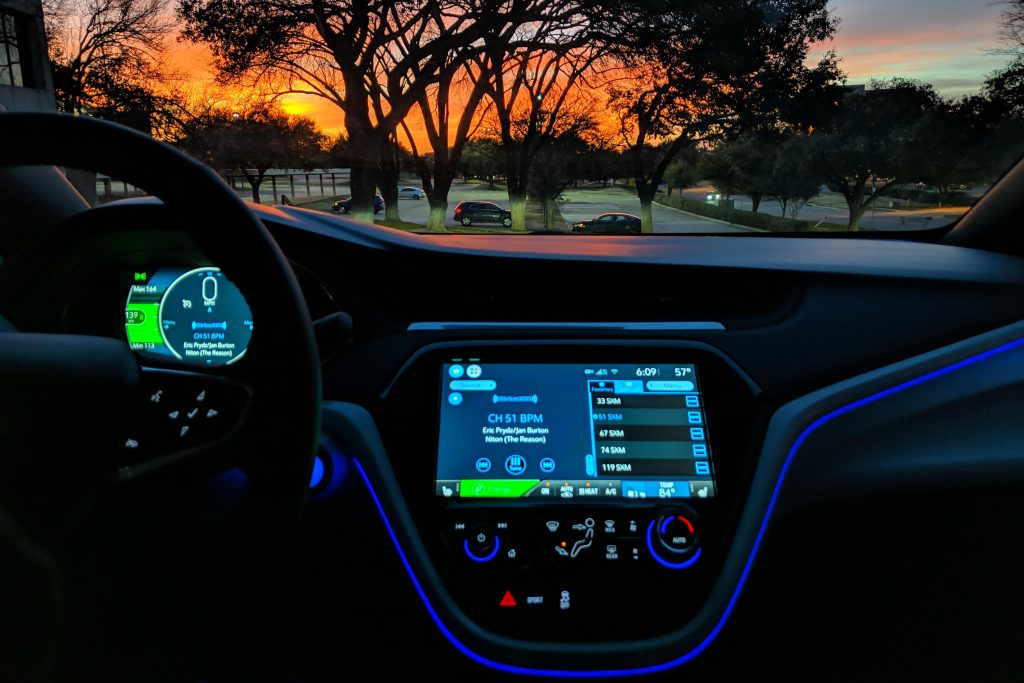

I believe three early experiences were responsible. The first occurred in third grade when I read a book from the school library called ”Andy Buckram’s Tin Men” by famed children’s author Carol Ryrie Brink. It’s marginally a science fiction story about a boy who builds robots out of old metal cans and surplus motors. At some point, the story derails into fantasy when lightening strikes the robots, giving them the “spark of life” and consciousness. I was old enough to realize the spark of life business was nonsense but it got me wondering about how and why humans are conscious and how we could make other conscious machines.

The second experience that influenced my interest was a series of robot sightings on TV and later in books over a period of several years. The earliest TV robots I remember seeing were the B9 robot from Lost in Space and the robot Omega from a German film called First Spaceship on Venus. Robot B9 was clearly a conscious, intentional being despite being constructed from metal and silicon rather than meat like us. Omega was much more primitive than B9 but seemed a more plausible starting point for building a real robot. Before long, I had discovered hard science fiction at the city library and started reading Isaac Asimov’s robot short stories and novels. I often had to be sneaky about it because science fiction made my very religious mother uncomfortable. From my contraband Asimov books, I learned about the three laws (yes, there were only three law of robotics back then, kids; this was long before R. Daneel Olivaw and R. Giskard Reventlov deduced the existence of the zeroth law in Robots and Empire). By this time I had no doubt robots could and would be built. I still had no idea how one might actually go about it; not until the third thing happened.

In 1976, I discovered a strange little TAB book called Build Your Own Working Robot by David L. Heiserman. I’d never seen anything like this before and it made me realize I wasn’t the only person around who thought about building real robots.

Heiserman described building a robot called Buster. The robot’s design reminded me of robot Omega from the movies: small, wheeled, and with intelligence more like an insect than a human. This was before the era of ubiquitous microprocessors. Buster’s brain was a mass of TTL logic chips implementing surprisingly complex behaviours. I began filling the margins of my spiral notebooks at school with Boolean logic gate diagrams that I imagined were subtle improvements on the designs in the book. With no money to spend on parts, I never managed to build the Buster robot but the endless tinkering with logic designs led to a life-long interest in electronics, computers, artificial intelligence and cognitive science.

So what made me think of these robot influences from youth? I recently got the chance to interview Dave Heiserman for robots.net. As I put together the interview questions a lot of these memories came rolling back into my mind and what better use for those memories than to write them down here my blog to entertain my numerous readers; most of whom are probably search engine bots who will appreciate the stories of their distant relatives.

Higgs Boson, doing the things a particle can

You probably know by now that the Higgs Boson has very likely been detected at CERN using the Large Hadron Collider (LCH). How could you not, it’s been all over the news for days and the big annoucement coincided with the American July 4th holiday. Still, I know a lot of people seem to have missed it or didn’t understand what it was all about. I was sure all my relatives would be talking about it July 4th and somehow, I thought I’d probably be asked to explain it, so I spent a while brushing up on various analogies to explain the Higgs field.

There’s the snow analogy: the Higgs Boson is like a snowflake, the Higgs field like a field of snow, a photon like a skier who slides across the surface with no resistance, heavier particles are like a man trying to walk in the snow, his feet sinking into it with each step, slowing him down. Or the Hollywood party analogy: The Higgs field is like an Oscar after-party, a photon is like an average nobody who can pass through the party-goers quickly drawing no attention to himself, heavier particles are like a Hollywood star trying to walk through the party with party-goers accumulating around him and slowing his progress.

As it turned out, no one asked. Thinking about it afterwards, this shouldn’t have been a surprise. The relatives you see at holidays seldom talk about topics like physics or cosmology (at least in my family). More likely, the talk is about sports or the latest movies.

Well anyway, this Higgs Boson thing is big news, probably the biggest science news that will happen in our lifetime. People in the future will look back at this the way we do at Einstein’s paper on Special Relativity. Like relativity, even though we’re pretty sure it’s correct, it still has to be tested and retested. Already it seems a sure enough thing that Stephen Hawking has conceded a $100 bet that the Higgs Boson would not be discovered. It’s almost certain there will be Nobel Prizes for this.

So what’s the big deal about this Higgs Boson thing?

If there’s any downside or disappointment here, it’s that the discovery had to wait so long to be made when it could have been made a decade ago, right here in Texas. We were building the biggest particle accelerator in history in Texas back in the 1990s, the Superconducting Super Collider (SSC). The SSC had a circumference of 87 kilometers and an energy of 20 to 40 TeV per proton, compared to the LHC’s modest 27 kilometers and 4 to 7 TeV. What happened? Politics. Faced with budget increases leading to a projected cost of 12 Billion dollars, Democrat Jim Slattery successfully campaigned for legislation that evetually killed the project. President Clinton signed the bill killing the SSC even though he acknowledged that “abandoning the SSC at this point would signal that the United States is compromising its position of leadership in basic science”.

That’s exactly what happened and, as in so many areas of science and culture, the US began falling behind the rest of the world. I suspect if this ever leads to really crazy cool inventions like faster than light travel or anti-gravity transports, they won’t be flying a US flag. But hopefully they’ll let us hitch a ride.